[WD-1.1] Why User Research Matters
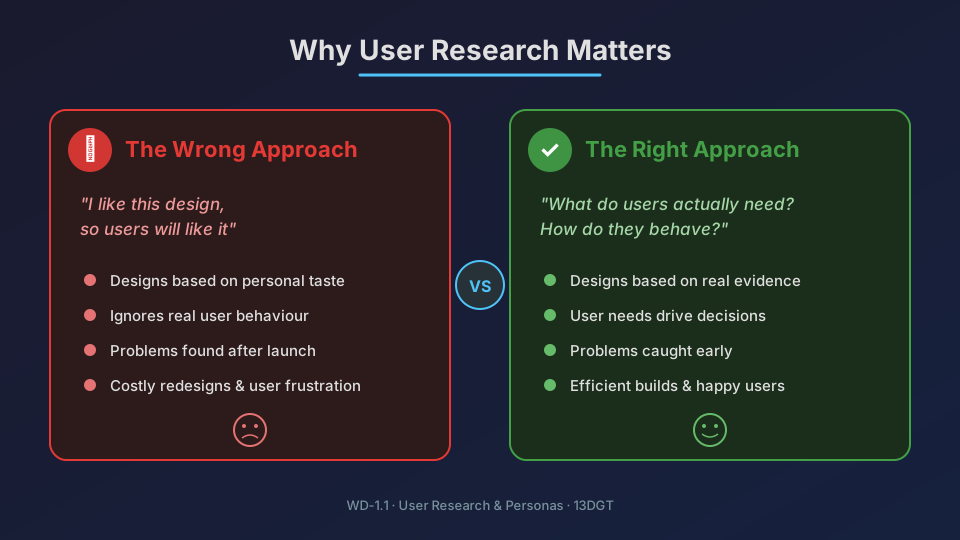
The Wrong Approach
❌ "I like this design, so users will like it"
The Right Approach
✅ "What do users actually need? How do they behave?"
📹 Deep Dive: The UX Research Process
To understand how these concepts are applied at a professional level, this guide from a Google UX Designer explains the step-by-step approach to gathering objective user data. * Video: Step-by-step user research guide I use at Google as a UX designer
Why It Matters
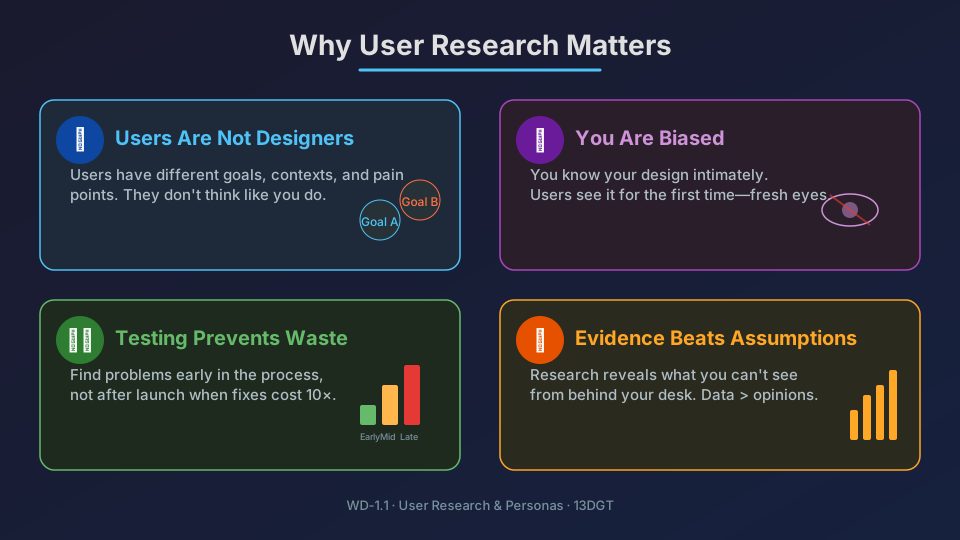
- Users are not designers – Different goals, different pain points
- You are biased – You know your design; users don't
- Testing prevents waste – Find problems early, not after launch
- Evidence beats assumptions – Research reveals what you can't see from your desk
Quick Research Methods
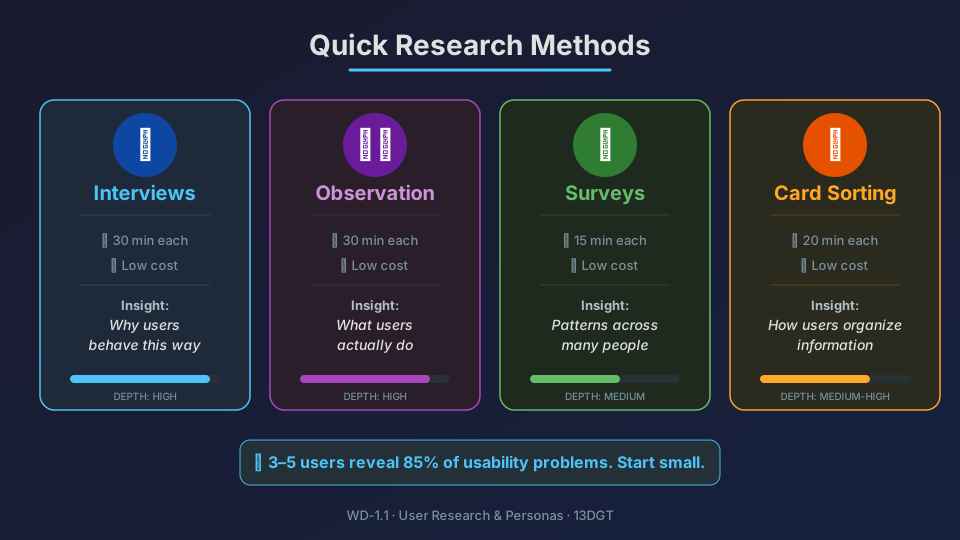
| Method | Time | Cost | Insight |
|---|---|---|---|
| Interviews | 30 min each | Low | Why users behave this way |
| Observation | 30 min each | Low | What users actually do |
| Surveys | 15 min each | Low | Patterns across many people |
| Card Sorting | 20 min each | Low | How users organize information |
3–5 users reveal 85% of usability problems. Start small.
📹 Deep Dive: Choosing Your Method
Not all research is the same. This video breaks down the 5 most effective methods for an effective research plan, helping you choose between qualitative (feelings) and quantitative (data) approaches. * Video: 5 User Research Methods for an Effective Research Plan
Personas: Making Users Real
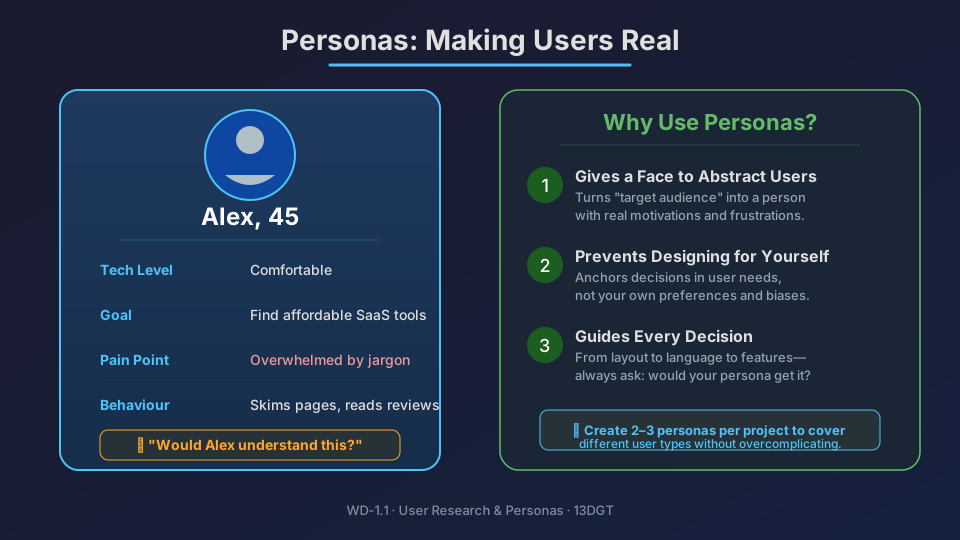
A persona is a fictional but realistic user profile.
Name: Alex, 45
Tech level: Comfortable
Goal: Find affordable SaaS tools
Pain point: Overwhelmed by jargon
Why? - Gives a face to abstract users - Prevents designing for yourself - Guides decisions: "Would Alex understand this?"
📹 Deep Dive: How to Create a Persona
Learn the 4-step process to turn your research data into a "North Star" for your design, including headers, demographics, goals, and scenarios. * Video: How To Create A User Persona (Video Guide)
From Research to Design
- Research users
- Create Personas
- Define Goals
- Map Flows
- Draw Wireframes
- Build Prototypes