Drones and Their Impact on the World
Course: 9DGT
Year Level: Year 9
Topic: Impacts of Computing
Focus: How drones are changing industries, technology, and society
Introduction
Drones are flying machines that can be controlled remotely or programmed to fly by themselves. They are also called UAVs or unmanned aerial vehicles. At first, many people thought of drones mainly as military tools or expensive gadgets, but that has changed very quickly. Today, drones are used by farmers, filmmakers, scientists, builders, rescue teams, and environmental groups.
What makes drones powerful is not just that they can fly. It is that they can carry cameras, sensors, GPS systems, thermal imaging tools, and software that help people collect information and do jobs more efficiently. A drone can look at a crop field, inspect a bridge, map a disaster zone, or help track forest loss. This means drones sit right at the intersection of hardware, software, data, and real-world problem solving.
As drones become more common, they also raise important questions. They can improve safety, reduce costs, and make new kinds of work possible, but they can also create concerns about privacy, surveillance, safety, noise, and who gets access to the technology. When we study drones, we are really studying how digital technology affects people and the environment.
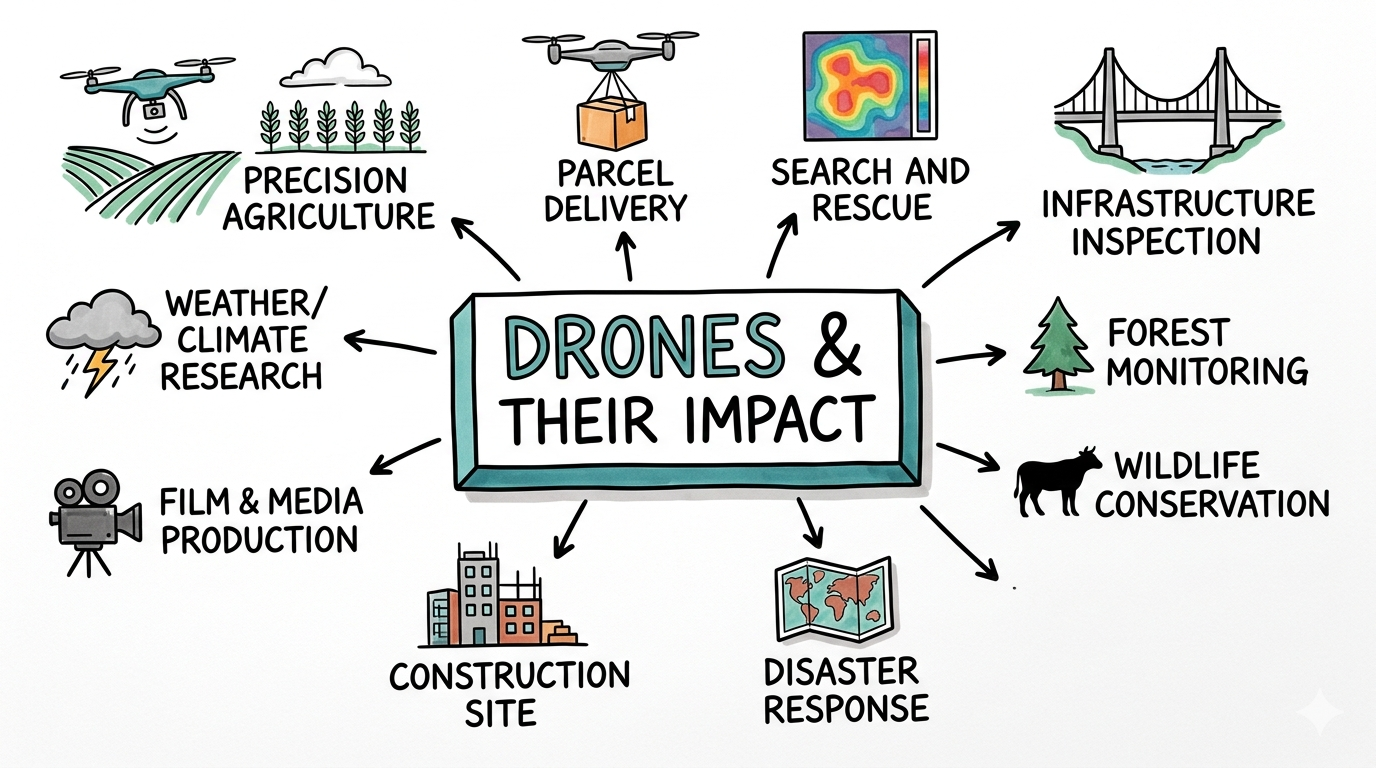
The ten use cases below show how wide the impact of drone technology already is. Later, this will give us a useful lead-in to a more focused discussion about deforestation and how drones can help monitor forests, detect illegal activity, and support replanting efforts.
1. Precision Agriculture
Farmers use drones to scan large fields from above and spot problems that are hard to see from the ground. A drone can help identify dry areas, pest damage, disease, and sections of a field that need more attention. Some drones can also spray crops very precisely.
This matters because farming is becoming more data-driven. Instead of treating an entire field the same way, farmers can make smarter decisions based on what the drone sees.
Positive impact: Less waste of water, fertiliser, and chemicals.
Concern: Expensive equipment and questions about who owns the farm data.
Video
https://www.youtube.com/watch?v=iCitINfJGys
Further Research
2. Parcel Delivery
Some companies are testing drones that can carry small packages directly to homes, schools, or remote communities. This could make delivery faster, especially for urgent items like medicine, spare parts, or essential supplies.
Drone delivery shows how computing can change logistics. Software plans routes, manages safety, and helps drones avoid obstacles while moving goods through the air.
Positive impact: Faster delivery of important items, especially in hard-to-reach places.
Concern: Noise, privacy, and safety issues if large numbers of delivery drones fill the sky.
Video
https://www.youtube.com/watch?v=88yQTzlmsiA
Further Research
3. Search and Rescue
When someone is lost in the bush, missing after a storm, or trapped after an accident, drones can help rescuers search much more quickly. A drone can fly over rough terrain, stream live video, and sometimes use thermal cameras to detect body heat.
This is a strong example of technology saving time in situations where every minute matters.
Positive impact: Faster searches can save lives.
Concern: Bad weather, battery limits, and poor training can reduce how effective drones are in emergencies.
Video
https://www.youtube.com/watch?v=ZrV5n-v0eMk
Further Research
4. Infrastructure Inspection
Bridges, power lines, wind turbines, towers, and roofs all need regular inspection. Instead of sending workers into dangerous places, organisations can use drones with high-quality cameras to inspect structures from the air.
This is important because it combines computing, imaging, and engineering. The drone collects visual data that people can analyse later to find cracks, damage, or wear.
Positive impact: Safer inspections and quicker maintenance decisions.
Concern: A crashed drone can create new risks, especially around roads, power systems, or large public spaces.
Video
https://www.youtube.com/watch?v=BeAGF-b7CYQ
Further Research
5. Forest Monitoring and Deforestation Detection
Drones can be flown over forests to check tree cover, map cleared land, and identify signs of illegal logging. They can also help track how healthy a forest is over time and show where damage is increasing.
This use case is especially important because it connects drone technology directly to environmental protection. Instead of waiting for reports from the ground, people can gather visual evidence much faster.
Positive impact: Faster detection of deforestation and better evidence for conservation work.
Concern: Drones can collect data, but they still need people, laws, and organisations on the ground to act on that information.
Video 1 - Forest Monitoring
https://www.youtube.com/watch?v=zo7kBmlokhE
Video 2 - Reforestation using seed bullets
https://www.youtube.com/watch?v=7C7-uvmSG6Y
Video 3 - Reforestation using sapling planter
https://www.youtube.com/watch?v=o_D8JCQ2mX4
Further Research
6. Wildlife Conservation
Conservation groups use drones to monitor animals, count populations, and watch areas where poaching may be happening. A drone can cover much more ground than a person on foot and can often do it with less disturbance to the animals.
This shows that drones are not only about business. They can also support science, biodiversity, and environmental protection.
Positive impact: Better tracking of endangered species and safer anti-poaching work.
Concern: If used badly, drones can disturb wildlife or push animals away from nesting or feeding areas.
Video
https://www.youtube.com/watch?v=4Ub0W9PL35w
Further Research
7. Disaster Response and Mapping
After floods, earthquakes, fires, or storms, it can be hard to understand what has happened on the ground. Drones can quickly map damaged areas, find blocked roads, and help emergency teams decide where help is needed first.
This is a strong example of a digital tool helping people make decisions under pressure. A map created by a drone can guide rescue teams, engineers, and aid organisations.
Positive impact: Faster information after a disaster can improve emergency response.
Concern: Disaster zones are dangerous places to fly, and poor coordination can create confusion.
Video
https://www.youtube.com/watch?v=UfhijoCMg-I
Further Research
8. Construction Site Monitoring
On large building sites, drones can capture regular aerial photos and maps to show how work is progressing. Builders and project managers can compare the site over time, check measurements, and see whether work is on schedule.
This use case shows how drones support planning, communication, and record keeping, not just flying.
Positive impact: Better project tracking and fewer mistakes caused by poor visibility.
Concern: Construction data can be sensitive, so security and privacy still matter.
Video
https://www.youtube.com/watch?v=OkhuTr9YkNk
Further Research
9. Film and Media Production
Drones have changed filmmaking by making aerial shots cheaper and easier to capture. A small drone can create smooth video that used to require a helicopter, crane, or very expensive camera setup.
This has had a big effect on media because it gives more creators access to professional-looking footage. It is a good example of how technology can democratise creative work.
Positive impact: More people can create high-quality video and visual storytelling.
Concern: Filming near people or private property can create privacy and safety problems.
Video
https://www.youtube.com/watch?v=yRl3cr6kzcw
Further Research
10. Weather and Climate Research
Scientists are using drones to fly into places that are difficult or dangerous for people and larger aircraft. Drones can collect data about wind, temperature, moisture, and storm systems, helping researchers understand weather patterns and improve forecasting.
This shows drones being used not just for business, but for science and public knowledge. Better weather data can help communities prepare for dangerous conditions.
Positive impact: More detailed data can improve forecasting and scientific research.
Concern: Research drones can be expensive, and harsh weather can easily damage equipment.
Video
https://www.youtube.com/watch?v=u9cF1XGgvOA
Further Research
Conclusion
Across these ten examples, drones are doing much more than flying for fun. They are collecting data, helping people make decisions, improving safety, changing creative work, and solving problems in agriculture, science, construction, emergency response, and conservation.
That makes drones a strong example of the impact of computing. Their value comes from the combination of sensors, software, communication systems, automation, and data analysis. The next step is to zoom in on one of the most important environmental uses of drones: how they can help respond to deforestation and support reforestation efforts.
End of Drones and Their Impact on the World